XRP vs. Bitcoin: A Comprehensive Comparison
Understanding the key differences between XRP and Bitcoin is crucial for anyone involved in digital finance. This article provides a detailed comparison of their technology, speed, cost, and scalability, helping you make informed decisions.
Introduction
Bitcoin, the first cryptocurrency, revolutionized the financial world by introducing decentralized digital currency. XRP, created by Ripple Labs, offers a different approach, focusing on facilitating fast and cost-effective international payments. While both are digital assets, their underlying technologies and goals differ significantly. This comparison will explore these differences, providing a clear understanding of each cryptocurrency's strengths and weaknesses.
Technology
Bitcoin operates on a decentralized blockchain, maintained by a network of miners who validate transactions through a proof-of-work (PoW) consensus mechanism. This process requires significant computational power, contributing to its security but also limiting its speed and scalability.
XRP, on the other hand, uses a distributed ledger technology called the XRP Ledger. It employs a unique consensus mechanism known as the Federated Consensus Protocol (FCP). Instead of miners, a network of trusted validators confirms transactions, making the process much faster and more energy-efficient.
Dr. Anya Sharma, a blockchain technology professor at the University of Toronto, notes, "Bitcoin's strength lies in its decentralization, while XRP excels in transaction speed and efficiency due to its unique consensus mechanism."
Speed
Transaction speed is a critical factor for any digital currency. Bitcoin transactions can take anywhere from 10 minutes to over an hour to confirm, depending on network congestion. This slow speed can be a significant drawback for everyday transactions.
XRP transactions, however, are significantly faster. They typically confirm in just a few seconds, making XRP a more practical option for real-time payments and cross-border transfers. The Ripple network boasts an average transaction confirmation time of around 4 seconds.
Elena Petrova, a financial analyst at Global Finance Solutions in London, states, "The speed advantage of XRP makes it particularly attractive for international banking and remittance services, where quick settlement is essential."
Cost
Transaction costs, also known as gas fees, are another important consideration. Bitcoin transaction fees can fluctuate significantly depending on network activity. During periods of high demand, these fees can become quite expensive, making small transactions uneconomical.
XRP transaction fees are consistently low, typically a fraction of a cent. This makes XRP a cost-effective solution for both small and large transactions, especially in international payments where traditional banking fees can be substantial.
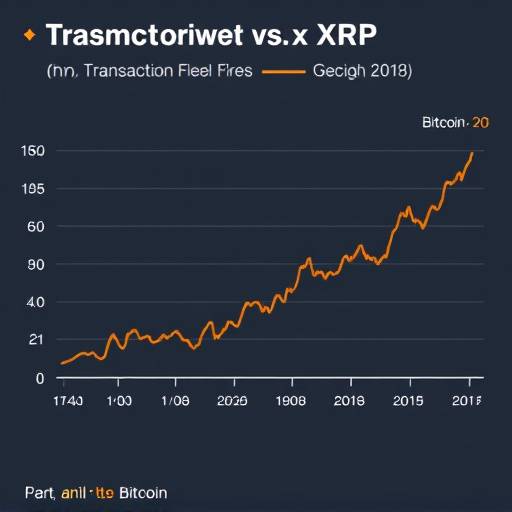
According to a recent report by Crypto Economics Research, XRP's lower transaction costs can lead to significant savings for businesses and individuals conducting cross-border transactions.
Scalability
Scalability refers to the ability of a cryptocurrency network to handle a large volume of transactions. Bitcoin's blockchain has a limited transaction processing capacity, which can lead to network congestion and delays during peak periods.
XRP is designed to handle a much higher transaction throughput than Bitcoin. The XRP Ledger can process thousands of transactions per second, making it significantly more scalable. This scalability is crucial for supporting widespread adoption and real-world applications.
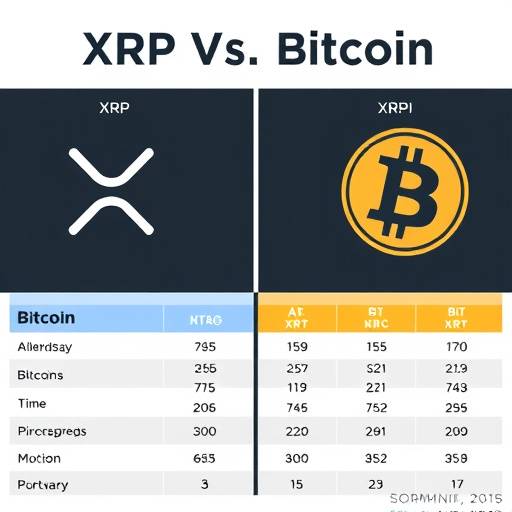
Comparison Table: XRP vs. Bitcoin
| Feature | XRP | Bitcoin |
|---|---|---|
| Technology | XRP Ledger, Federated Consensus Protocol (FCP) | Blockchain, Proof-of-Work (PoW) |
| Transaction Speed | 4 seconds | 10 minutes - 1 hour |
| Transaction Cost | Very low (fraction of a cent) | Variable, can be high |
| Scalability | High (thousands of transactions per second) | Limited |
| Purpose | Facilitating fast and cost-effective international payments | Decentralized digital currency |
Conclusion
Both XRP and Bitcoin have their strengths and weaknesses. Bitcoin's decentralized nature and established reputation make it a store of value and a hedge against traditional financial systems. XRP's speed, low cost, and scalability make it a practical solution for international payments and institutional use. The choice between XRP and Bitcoin depends on individual needs and priorities. For those seeking a decentralized digital currency with a strong track record, Bitcoin remains a leading option. For those prioritizing speed, low cost, and scalability for payments and financial transactions, XRP offers a compelling alternative. As the cryptocurrency landscape continues to evolve, understanding the nuances of each digital asset is crucial for navigating the future of finance.